Jump to:
Remote work and flexible hours have become the new norm. And many still continue to adapt to working from home. That’s where a good garden office comes in. If you’re thinking about setting one up, you’re in the right place.
In this guide, we’ll give you practical tips on how to shape yours around your job. Keep reading for ideas on creating a workspace that helps you achieve a work-life balance.
Garden Office Setup Tips
Cater to your job needs
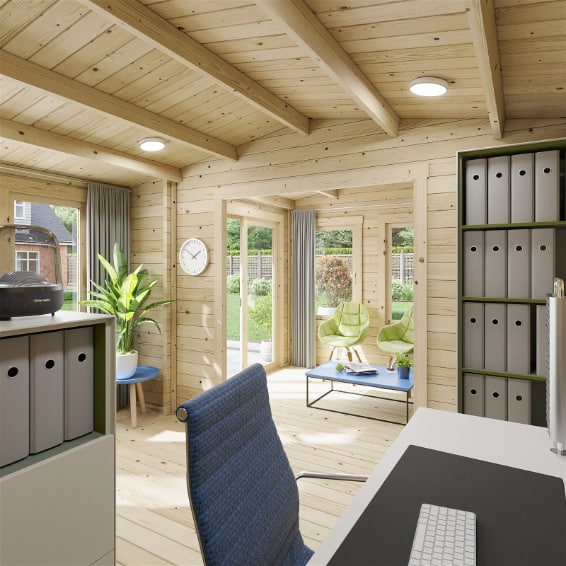
Your garden office should fit you, not the other way around. Say, you’re a designer. Make sure you’ve got enough room to move and a corner for your computer and drawing tablet.
A writer? That calls for a comfy chair and a quiet spot away from the neighbour’s dog. And if you’re seeing clients or doing Zoom calls, think about privacy and background noise. Take the time to think about your needs, and your garden office will fall into place.
Location and orientation
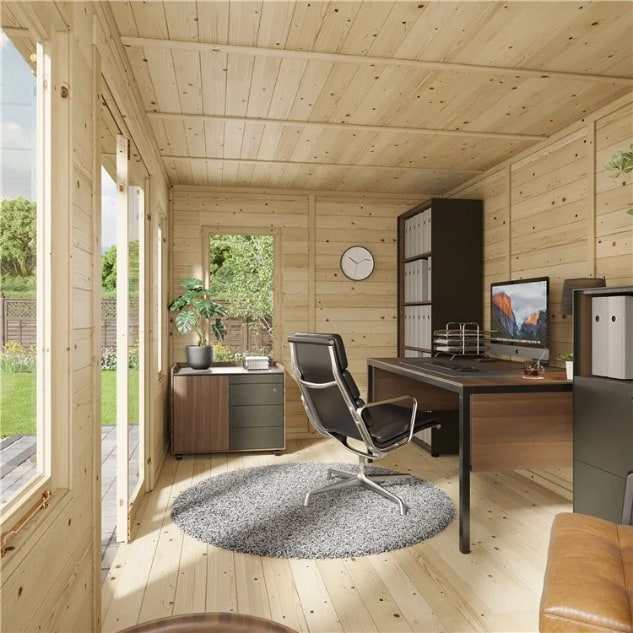
The location of your outdoor office can impact your 1.) work environment and 2.) productivity. There are a couple of things you need to consider:
Sunlight and temperature
You want enough light to keep you awake, but not so much that it turns into a midday oven. Ample sunlight can help reduce eye strain and boost mood – and in most cases, it can also save on lighting costs.
If you’ll use it year-round, heating matters. A smart plug or app-controlled heater can make a huge difference here. You can turn it on from your phone or on a schedule, and by the time you step into your garden office, it’s warm and ready for you. No sitting in the cold for the first 30 minutes of the working day.
Accessibility
And don’t forget the walk there. Ideally, the office should be situated as close to your home as you can. This minimises interruptions and maximises convenience.
To enhance accessibility, create a clear path to the office. Add a mat or stepping stones, and line it with a few plants you enjoy looking at. This will make walking out there something to look forward to.
Here are a few more ways to get the location working for you:
- Put your windows where they get the most light.
- Add a tree or some shade to keep it cooler in hot weather.
- Use light colours inside to make the room brighter. Check out these log cabin colour ideas for inspiration.
Garden Office Layout Ideas
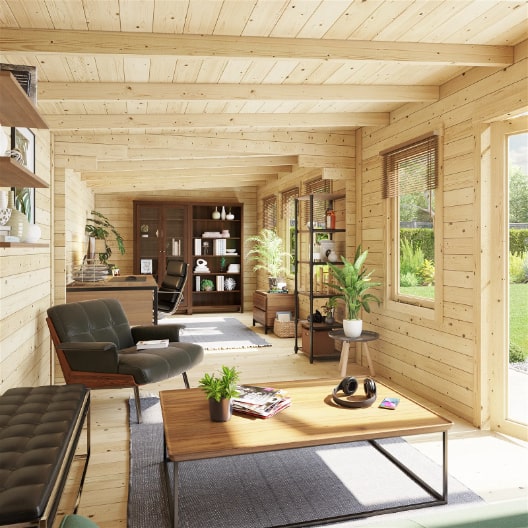
When it comes to the layout of your garden room workspace, it can be one of these three common options:
- An open space for collaboration
- A closed or private office type for focused work and personal use
- With cubicles or partitions (take our garden office Kent as a reference)
Your decision may vary depending on the size of the building. You may, however, use these ideas to envision what you can do to maximise the available space you have.
Furniture and ergonomics
The selection of ergonomic furniture cannot be overstated either. It’s key for your comfort and productivity.
Invest in a comfortable chair, which is a must-have, regardless of what profession you have. You can never go wrong with one that features good lumbar support and/or adjustable armrests.
If your budget allows, opt for an adjustable or standing desk to reduce strain. Such factors enable you to accommodate computers and drawing tablets. Ergonomic keyboard and mouse systems and monitor risers are also worthwhile.
Good indoor lighting plays a vital role in setting the mood and reducing eye fatigue.
Personal touch
Incorporate a colour scheme that energises you. Create a dedicated area to showcase your achievements or works in progress. Plants can also enhance creativity and reduce stress. This not only motivates but also enhances your professional identity.
More layout setup ideas
To make the most of your space, here are some ways you could arrange your garden office:
- Filing and admin: Desk along one wall and filing cabinets on the opposite side. Shelves for paperwork, and a small space for office supplies.
- Two workstations: L-shaped desks in opposite corners. Add a shared central storage or printer area to keep everything accessible.
- Creative or planning area: One corner for computer work, and a table for hands-on projects. Plus, wall-mounted shelves or pegboards for materials.
How to Make a Productive Outdoor Office Space
A productive garden office is also about having a reliable internet and enough storage. A Wifi that’s fast enough to chase deadlines, paired with a tidy desk and a tidy mind.
Connectivity and technology
A stable internet connection is the backbone of remote work. It ensures seamless communication, video conferencing, file transfers, and access to online resources. Unreliable connectivity can lead to productivity losses and frustration.
To establish a reliable one, you have two main options:
- Wired network: Ethernet cables offer a direct and stable connection. Run cables from your home to the garden office. Use quality routers and switches for the best performance. This is generally best done at the same time as your electrical installation, so that the cable is protected.
- Wireless network: Invest in a high-quality Wi-Fi router with strong coverage, an external access point (AP), an extender (if the garden office is your main dead zone), or a mesh Wi-Fi system to expand signal throughout the home. Ensure it reaches your garden office with minimal interference.
For cable management, use cable clips, sleeves, and cable trays. These should get the job done in keeping wires organised and preventing accidents. A well-organised cable system also helps maintain a neat workspace and prevents distractions.
Storage and organisation
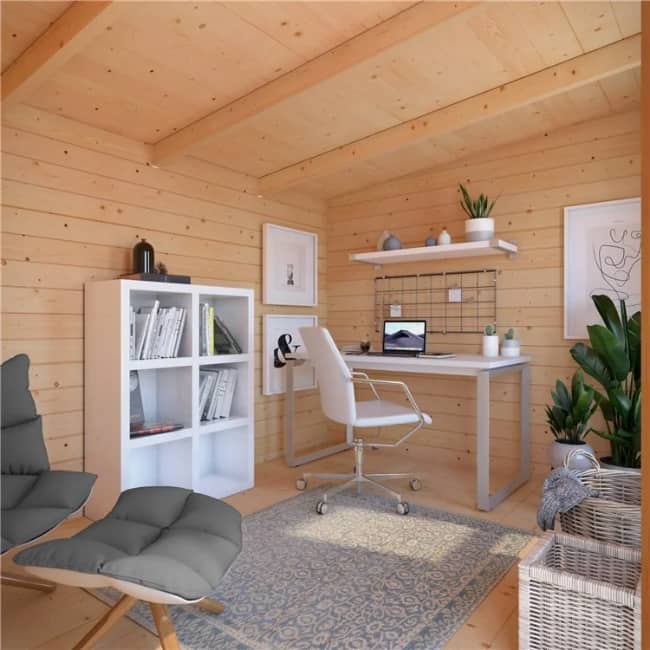
A clutter-free garden office is essential for maintaining focus and productivity. On top of keeping the space organised, it also helps you find what you need quickly. To achieve this, you need to implement storage options and organisation.
You may install vertical shelves for books and documents. Drawers and cabinets come in handy for art supplies. A flat-file cabinet is excellent for blueprints, and a filing cabinet for work documents.
If you plan to use containers and shelves, label them. Use transparent bins for easy visibility. For smaller items, you can never go wrong with wall-mounted organisers like pegboards.
How to Achieve a Work-Life Balance
A work-life balance is important, regardless of your profession. Now that you work so close to your home, aiming for this goal may become more attainable. To maximise your new workspace while maintaining a healthy balance:
- Set boundaries: Stick to clear working hours. Don’t let work spill over into your personal time.
- Have a dedicated workspace: Make your desk or office area separate from your home life. Room dividers or positioning your desk away from personal spaces can help.
- Take breaks: Step outside, enjoy the garden, or just have a few minutes to relax.
- Stay organised: Keep your office tidy and everything in its place. Less clutter means less stress.
- Look after yourself: Exercise, eat well, and keep healthy habits to stay focused and full of energy.
- Make time for family and friends: Plan breaks and leisure time around your family so you don’t miss out.
- Switch off: At the end of the day, turn off devices and disconnect from work. Give yourself proper downtime.
Round-up
Congratulations! You’ve taken a big step toward keeping work and home separate while getting more done. Your garden office is now set up to make working from home a lot easier.
Still looking for the right building? Garden Buildings Direct has a great range of insulated garden offices. Click the button below to check our available units:
You might find this next read useful when deciding: An Insulated Garden Office: Is It Really Worth It?